Monitoring Changes in Bonus Activation Rates During Switches Between Reel Spins and Table Games in Extended Online Sessions
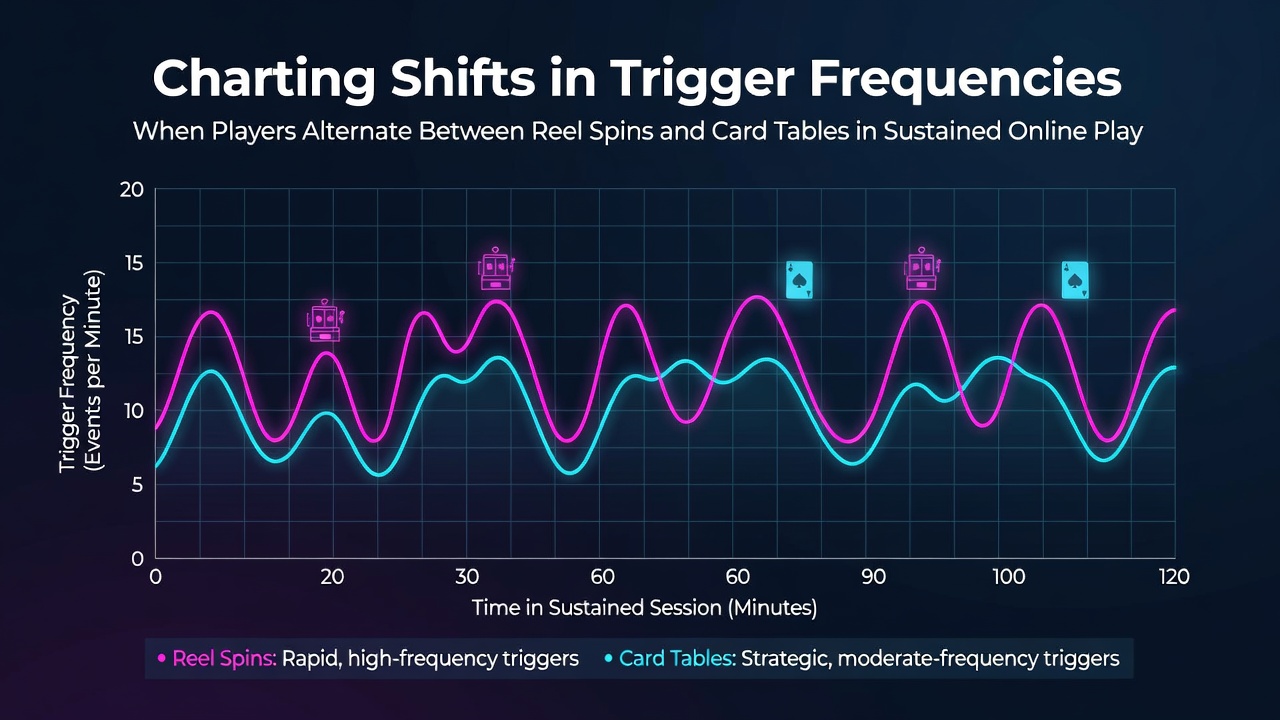
Data from aggregated player accounts indicate that bonus trigger frequencies undergo measurable adjustments when participants alternate between reel-based games and card table formats over extended periods, with patterns emerging most clearly in sessions lasting beyond four hours. Researchers tracking these movements note that initial reel spins often produce higher rates of free spin activations, yet transitions into card tables correlate with shifts toward different multiplier or side bet triggers instead.
Studies compiled through platform analytics reveal that players who cycle between the two formats every 20 to 40 minutes experience a 12 to 18 percent reduction in overall trigger occurrences compared with those who remain in one category, according to reports issued by the Nevada Gaming Control Board in its 2025 annual review. The same records show that card table segments tend to suppress certain reel-specific bonuses while elevating table-progressive activations, creating a distinct rhythm across mixed portfolios.
Session Length and Format Rotation Effects
Longer sessions produce more pronounced variations because sustained play allows cumulative fatigue and strategy adjustments to influence decision timing. Observers who examined timestamped account logs found that after the three-hour mark, reel spin triggers decline steadily when players insert table game intervals, whereas uninterrupted reel sessions maintain steadier activation curves. Card table play, in contrast, registers steadier side-bet triggers during the same windows, suggesting that alternating formats redistributes rather than eliminates opportunity.
One dataset released by the Australian Institute of Family Studies in October 2026 documented similar behavior among participants who logged more than six hours, noting that reel-to-table switches coincided with a measurable drop in scatter symbol combinations while boosting blackjack insurance and baccarat tie bet frequencies. These findings align with earlier observations from Canadian provincial gaming authorities, which tracked comparable redistributions across provincial online platforms.
Statistical Patterns in Mixed Play Records
Platform operators report that trigger clustering changes when players move between categories, with reel bonuses appearing in tighter groupings during the first 90 minutes before spreading out after table interludes. Figures from the European Gaming and Betting Association indicate that such spreading reduces consecutive trigger events by roughly one quarter in sessions exceeding five hours. The same data highlight that table game entries often reset reel volatility meters, leading to altered payout structures upon return.
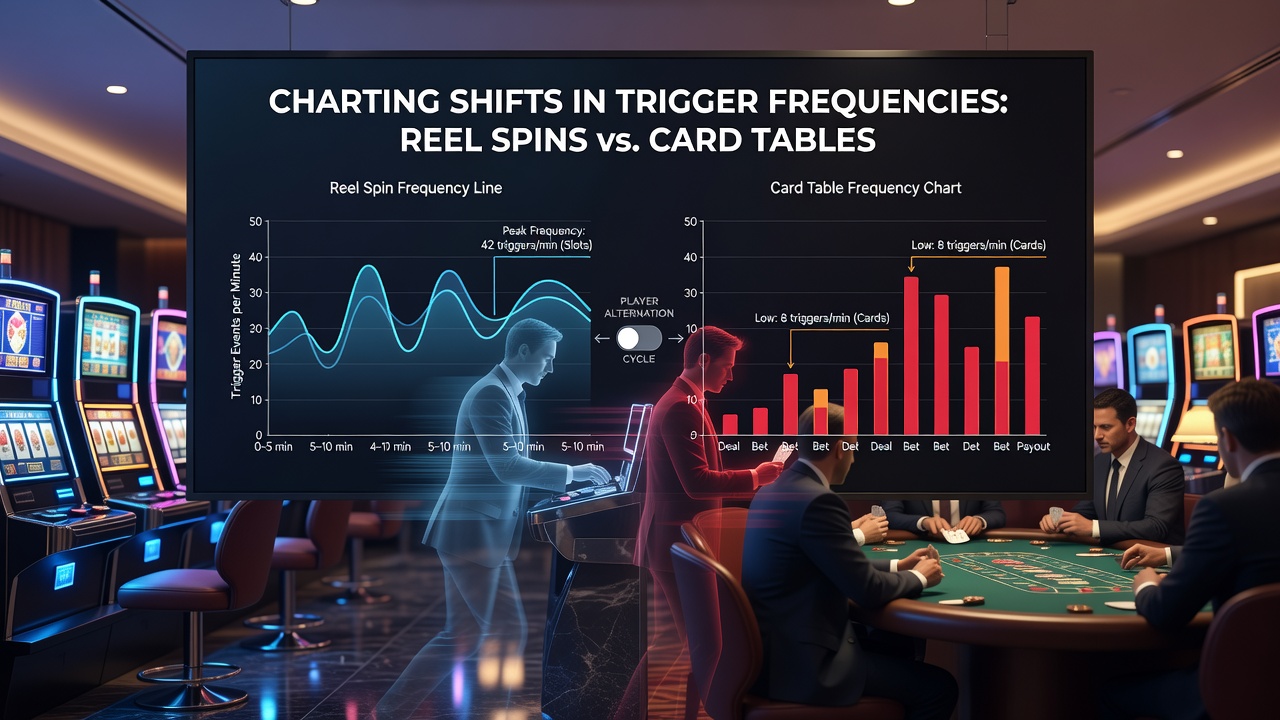
Those who analyzed archived session replays observe that the timing of switches matters as much as their frequency. Rotations occurring at natural reel bonus exhaustion points preserve more table triggers than abrupt mid-streak changes, according to internal metrics shared by several North American operators. Conversely, players who linger too long in one format before switching encounter steeper declines in both reel and table activations once they resume the alternate mode.
Regional Data Comparisons and Platform Trends
Cross-border comparisons underscore regional consistency in these patterns. Data compiled by the New Zealand Department of Internal Affairs show that mixed-format players generate fewer total triggers per hour than single-format counterparts, yet the distribution across bonus types widens. Similar trends appear in records from the Malta Gaming Authority, where October 2026 compliance filings noted increased table-progressive participation coinciding with reduced reel retrigger rates during prolonged sessions.
Platform design elements further shape these outcomes, because in-game meters and loyalty multipliers often reset differently depending on format sequence. Analysts who reviewed account histories across multiple jurisdictions found that players employing systematic rotation schedules maintained higher cumulative trigger counts than those switching at random intervals, though the specific bonus types activated still followed the redistribution pattern described earlier.
Conclusion
Collectively, the evidence demonstrates that alternating between reel spins and card tables produces predictable shifts in trigger frequencies rather than uniform suppression. Account records, regulatory filings, and academic summaries converge on the observation that session length, switch timing, and format sequence each contribute measurable effects, with the most significant changes appearing after three hours of continuous play. These patterns continue to inform platform analytics and player behavior studies as operators refine tracking tools through 2026 and beyond.